
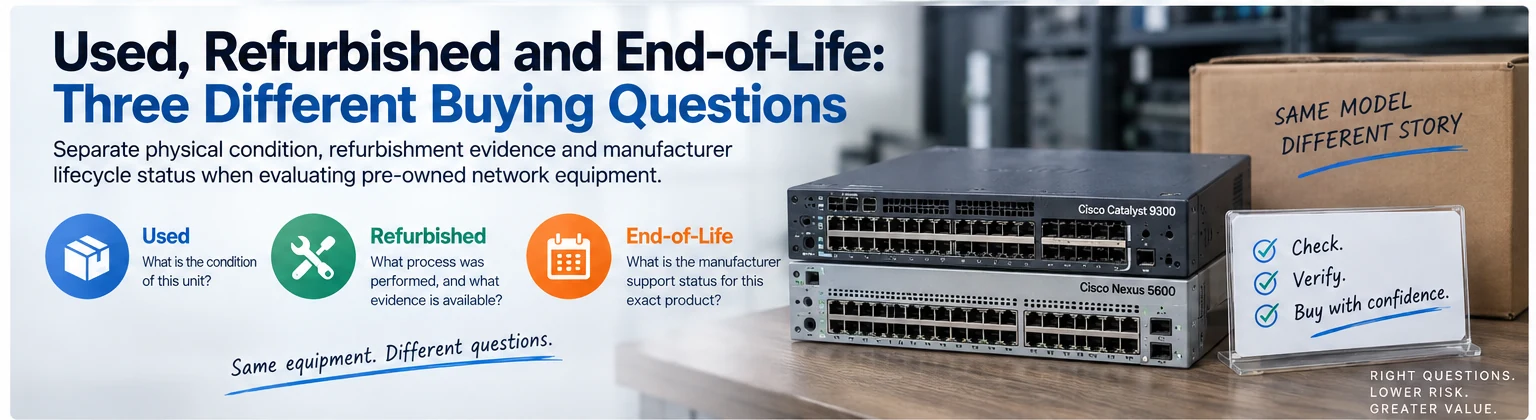
A used switch is not automatically end-of-life. A refurbished unit is not automatically supported by its manufacturer. An end-of-life notice does not, by itself, describe the physical condition of an individual device.
These terms answer different questions. Keeping them separate makes a pre-owned equipment evaluation more precise and reduces the chance that one reassuring label hides an unresolved risk.
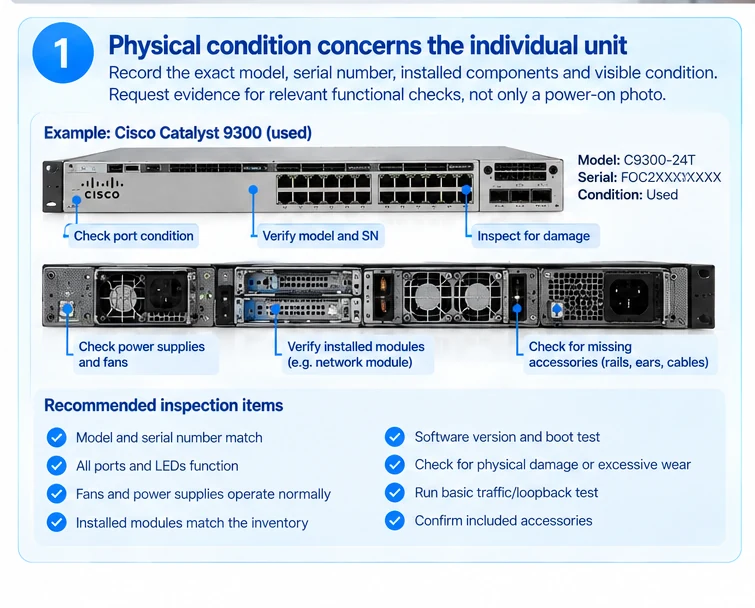
Physical condition concerns the individual unit
Record the actual model, serial number, installed components and visible condition. Request evidence for relevant functional checks, not only a photograph of the power indicator.
The inspection scope should follow the intended use. A spare for an installed platform needs exact component compatibility; a system intended for deployment needs a complete inventory and service-level acceptance. Cisco’s hardware documentation illustrates why module and host relationships remain important regardless of whether the equipment is new or used. R13R23
A clean exterior does not establish port health, thermal behavior or completeness.
Refurbishment needs a defined process
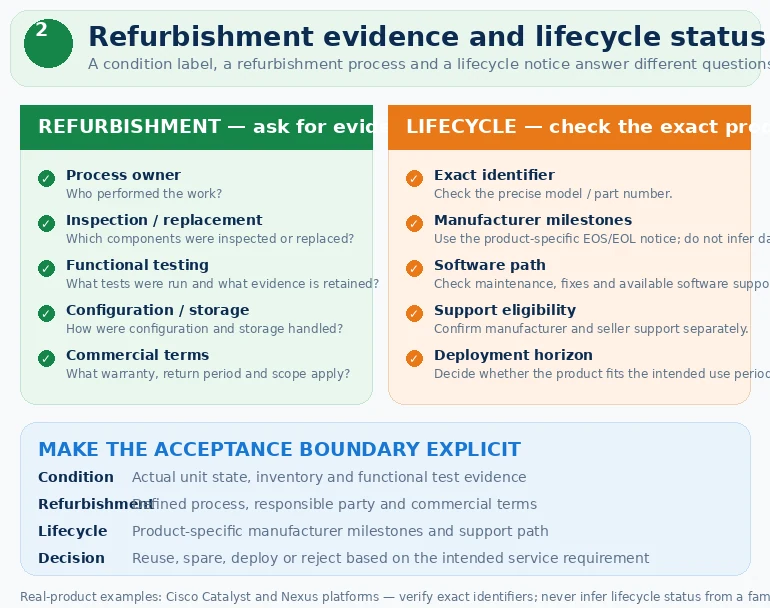
“Refurbished” is meaningful only when the seller explains what was done. Ask which components were inspected or replaced, which tests were performed, how configuration and storage were handled, and what evidence accompanies the unit.
Do not infer a manufacturer-authorized process from the word alone. Record the party responsible for the work and the scope of its warranty or return terms. Commercial promises should be explicit rather than supplied by a generic product description.
For an illustrative comparison, one offer may include a documented test report and a defined return period, while another uses the same condition label without describing any tests. The label is identical; the available evidence is not.
Lifecycle concerns the product and support path
Manufacturer lifecycle notices define milestones for particular products. Cisco’s end-of-life policy describes the framework, but the status and dates must be checked for the exact identifier and applicable notice. R19
Separate hardware availability from software maintenance, security fixes and support eligibility. A device that functions today may still be unsuitable for a requirement that depends on future software support. Conversely, a bounded replacement role can have a different risk profile from a new long-term deployment.
| Dimension | Question to resolve |
|---|---|
| Condition | What is the state and test history of this individual unit? |
| Refurbishment | What process was performed, by whom, with what evidence? |
| Lifecycle | Which manufacturer milestones apply to the exact product? |
| Commercial support | Who provides warranty, returns and technical assistance? |
| Deployment suitability | Can this configuration meet the intended service requirement? |
Make the acceptance boundary explicit
Agree on included accessories, software assumptions, physical tests and rejection conditions before purchase. For a replacement spare, verify it against the installed system and the approved procedure before an outage creates urgency.
The objective is not to accept or reject equipment based on a single label. It is to understand what is known, what remains uncertain and whether the resulting risk fits the intended use. Condition, refurbishment and lifecycle belong in separate fields because they support separate decisions.
Engineering illustrations
These figures illustrate the design concepts discussed here. They are not measured results, certified configurations or a supplied-equipment list.
Related reading
- Legacy Catalyst Maintenance: Exact Replacements and a Controlled Exit Plan
- Legacy Catalyst Replacement Checklist: Match Components and Preserve Services