

The Cabling Work Behind a Successful HPC Fabric
Independent editorial analysis of third-party public reports. No SwitchInfra implementation or performance claim.
Networking insights博客
Independent editorial analysis of third-party public reports. No SwitchInfra implementation or performance claim.
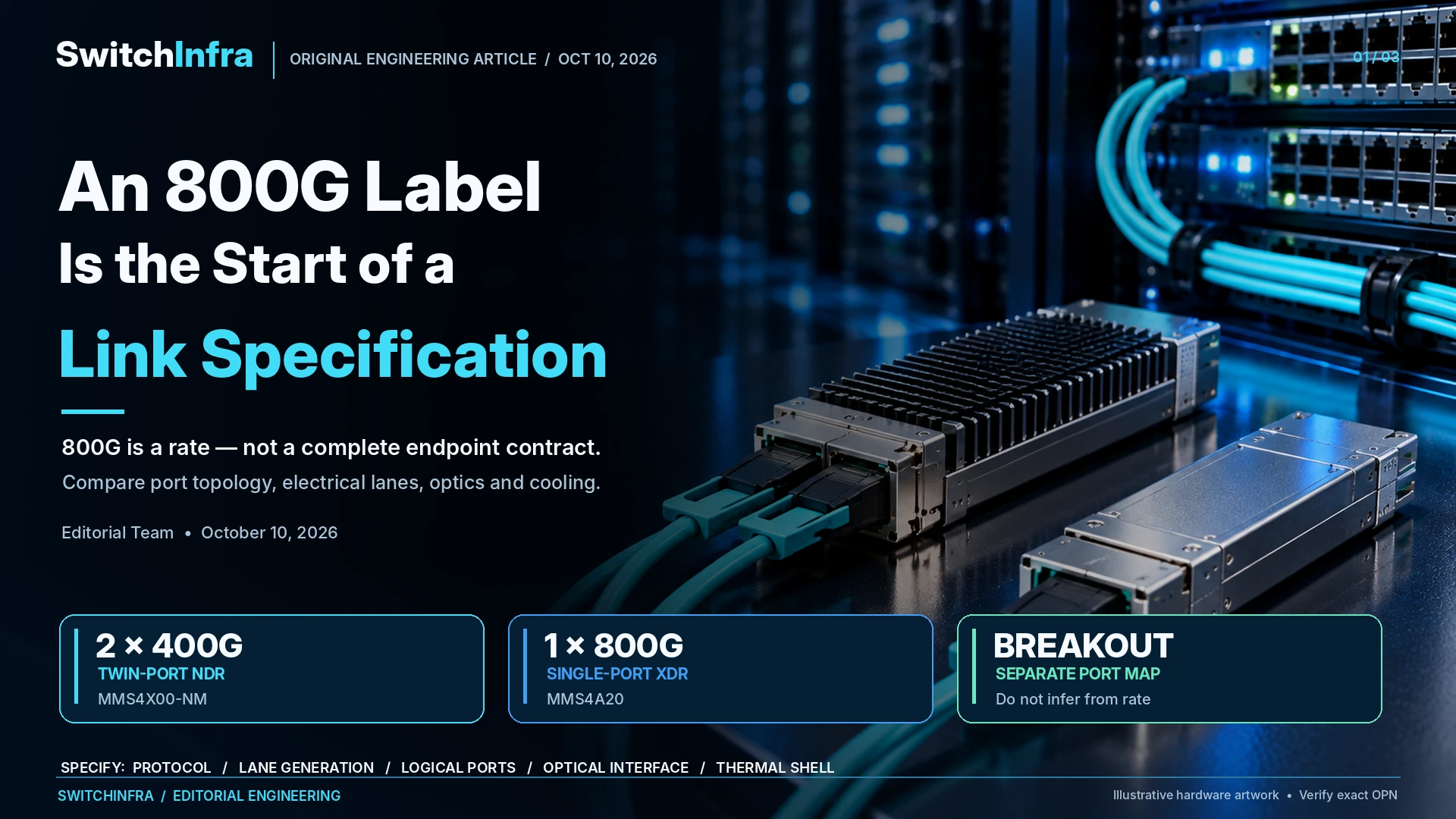
Original engineering article based on manufacturer manuals; no fabricated deployment result or owned-customer success claim.
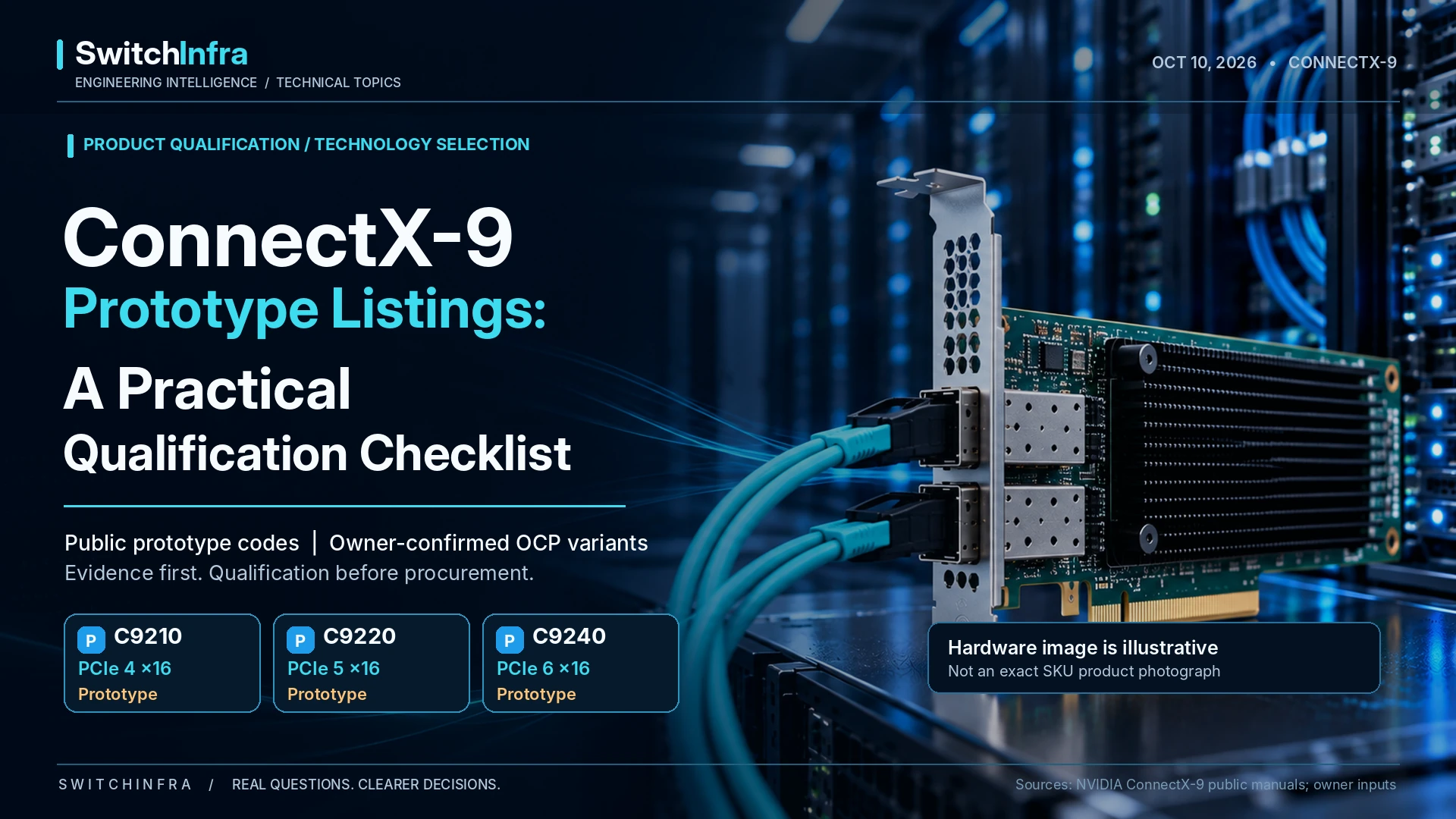
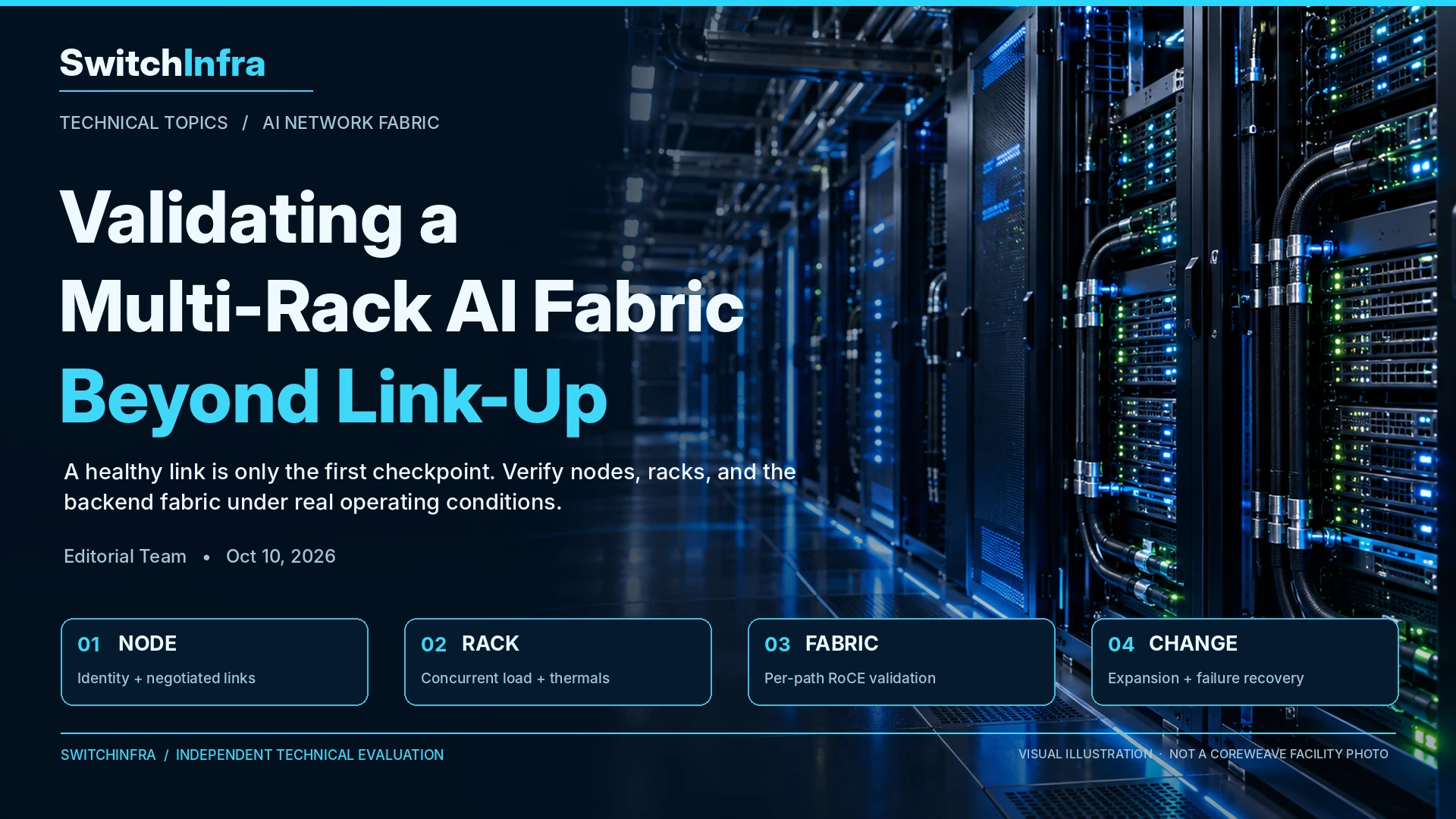
Independent technical selection guidance. No claim of a SwitchInfra installation, supplied batch, certified performance or customer outcome.
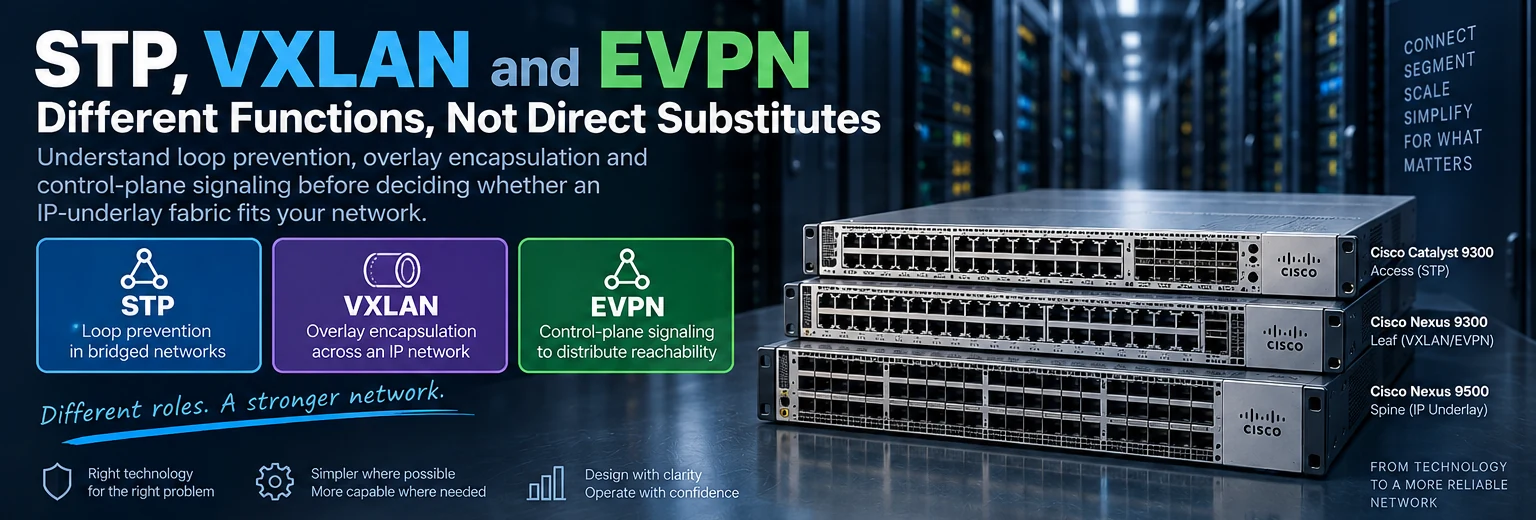
Understand loop prevention, overlay encapsulation and control-plane signaling before deciding whether an IP-underlay fabric fits your network.
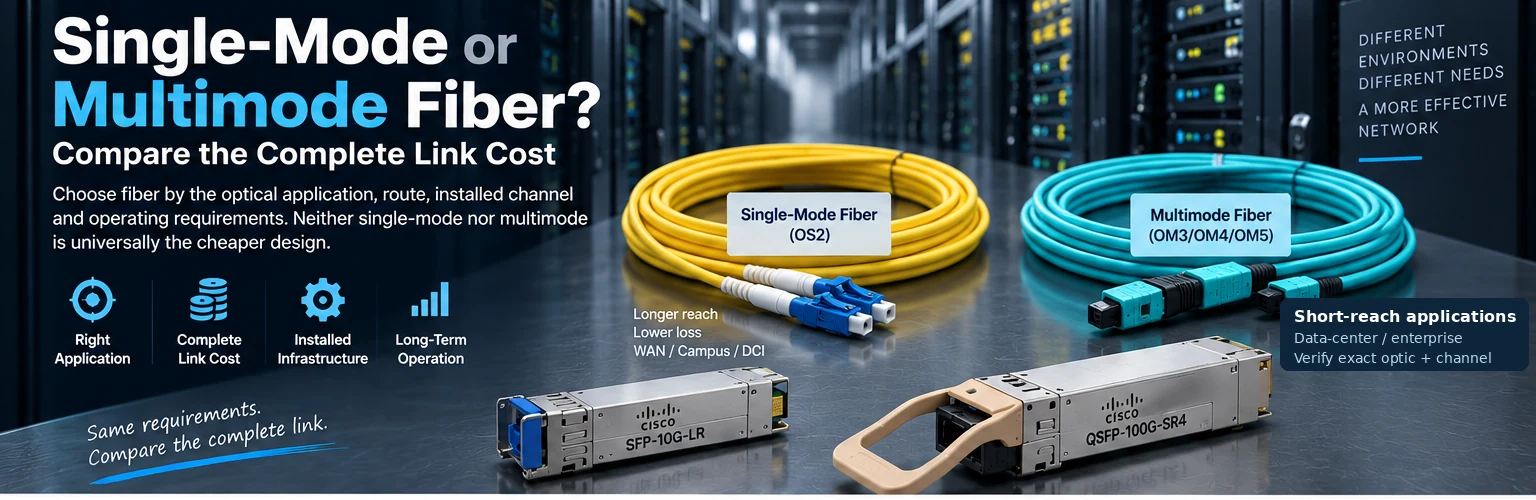
Choose fiber by the optical application, route, installed channel and operating requirements. Neither single-mode nor multimode is universally the cheaper design.
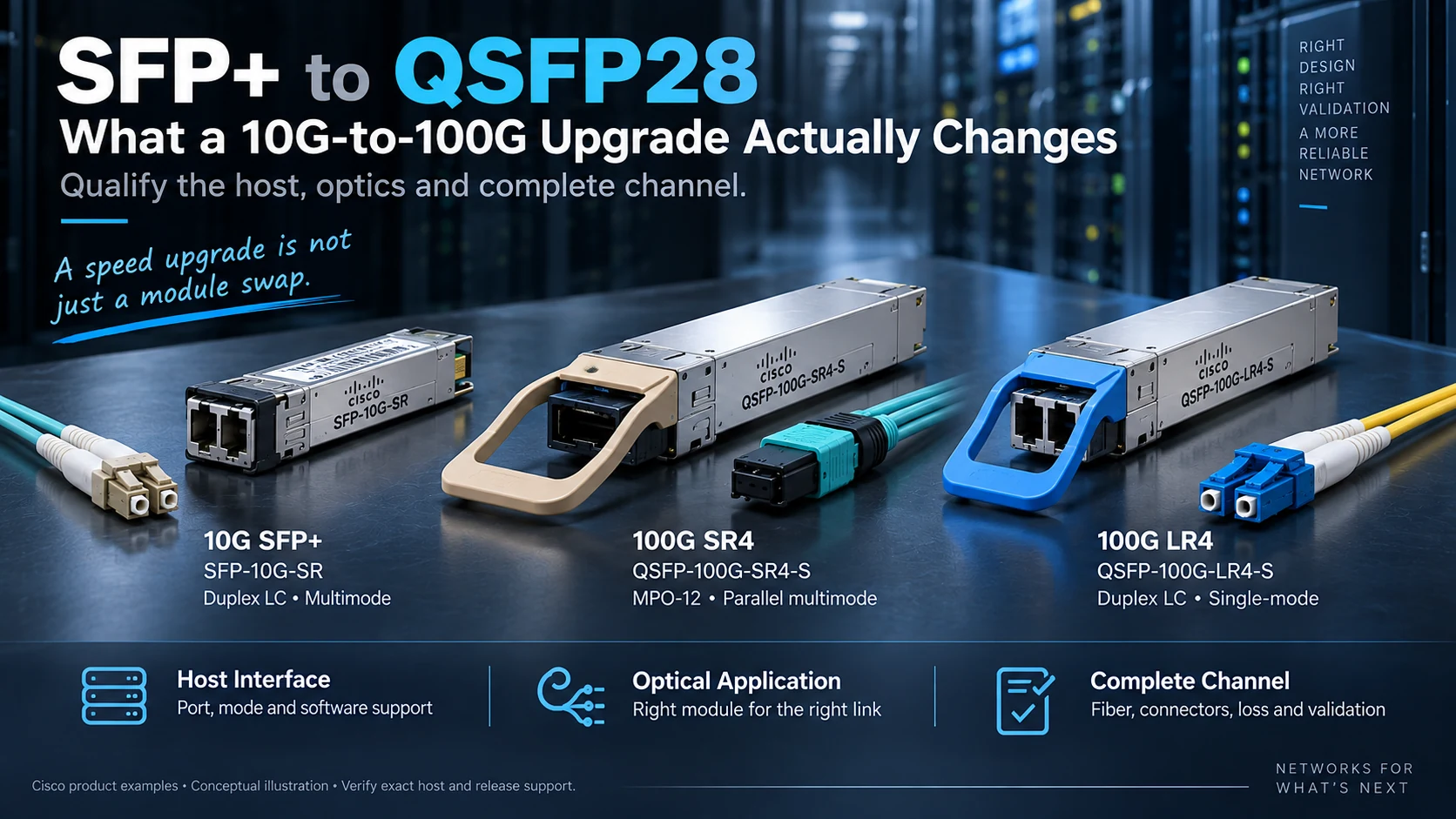
A move from 10G SFP+ to 100G QSFP28 changes host interfaces and potentially the optical channel. Form factor alone does not establish link compatibility.
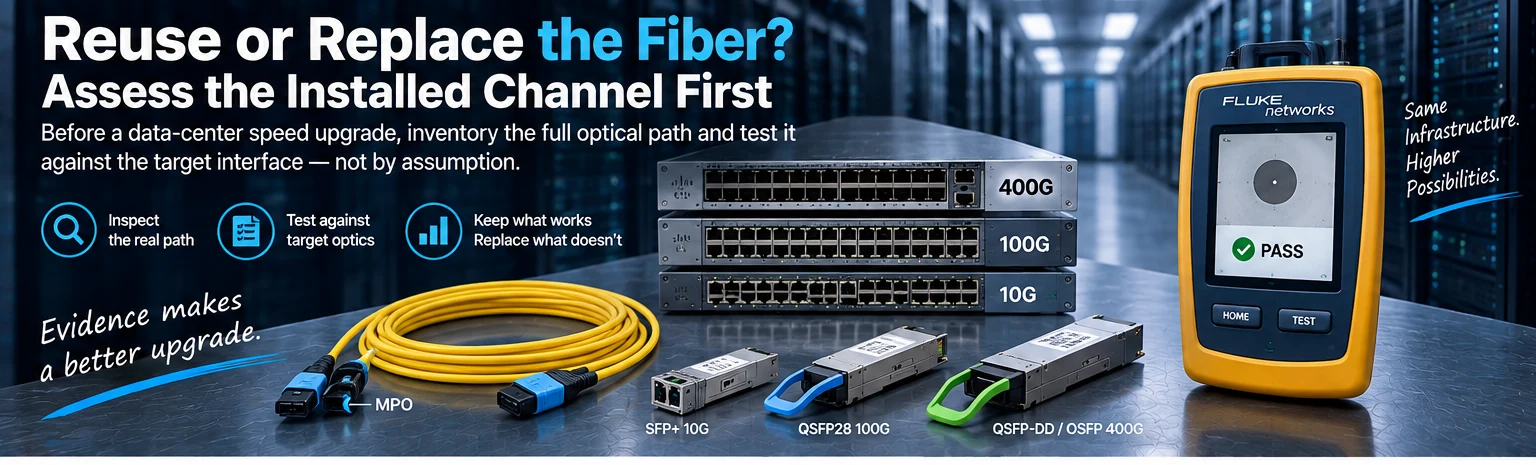
Before a data-center speed upgrade, inventory the full optical path and test it against the target interface rather than replacing—or reusing—fiber by assumption.
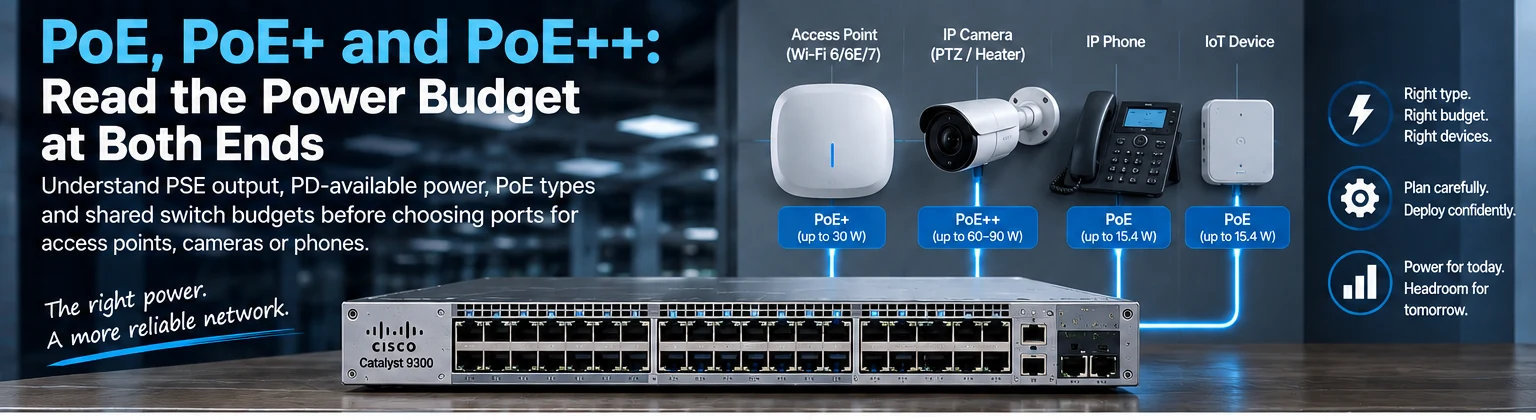
Understand PSE output, PD-available power, PoE types and shared switch budgets before choosing ports for access points, cameras or phones.
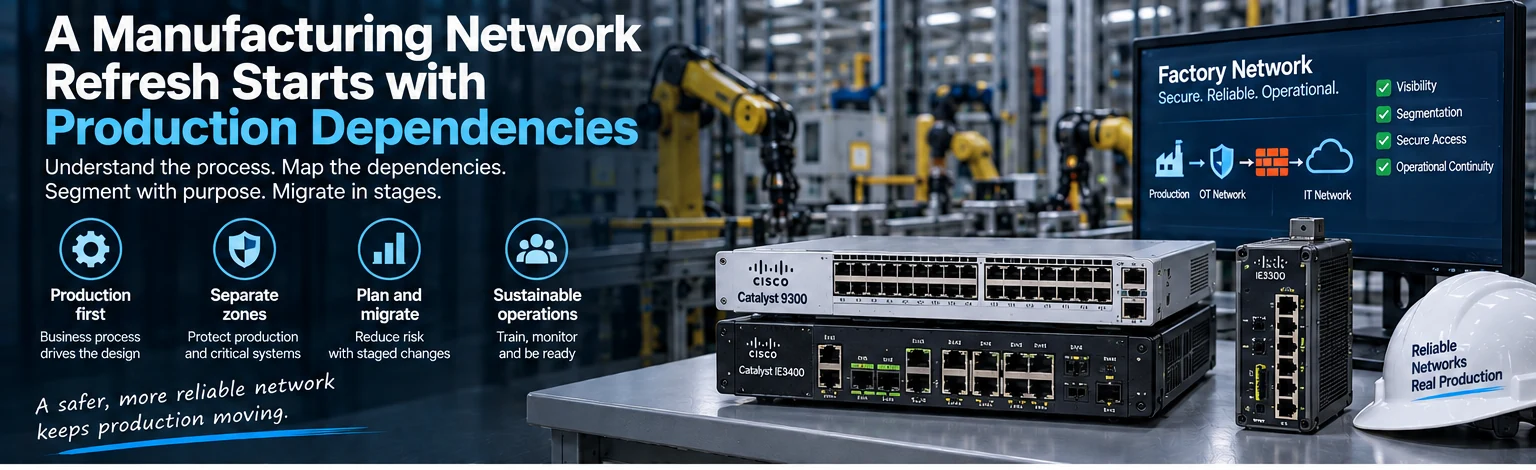
An illustrative modernization plan shows how to map operational dependencies, separate security zones and migrate in stages without inventing customer results.
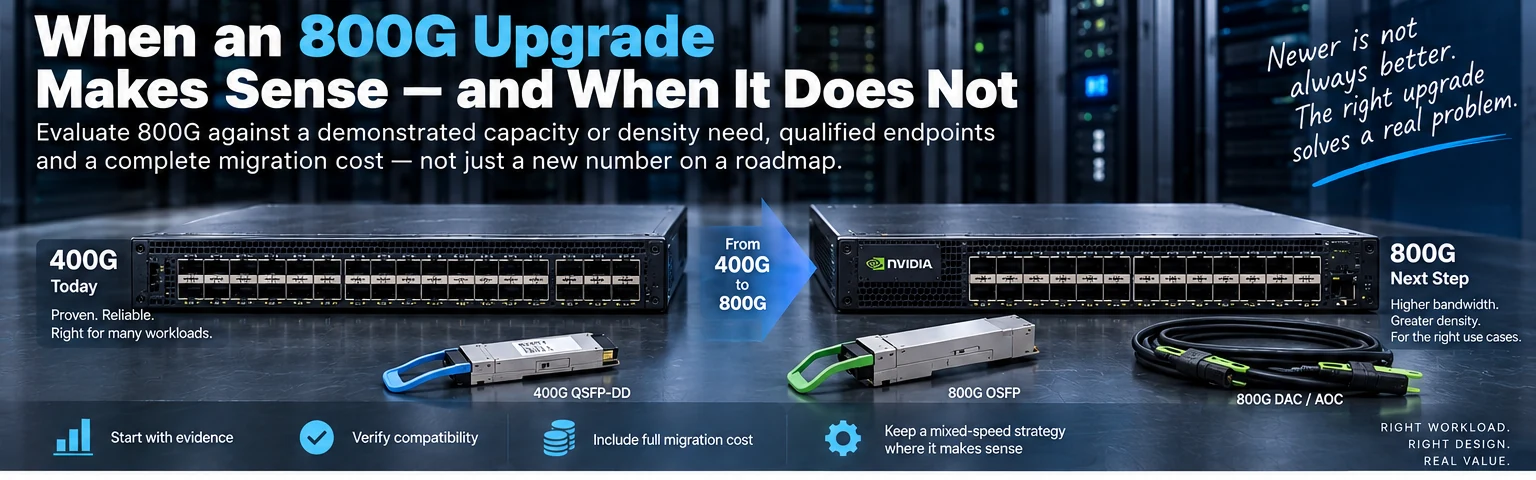
Evaluate 800G against a demonstrated capacity or density need, qualified endpoints and a complete migration cost rather than assuming every network must advance.
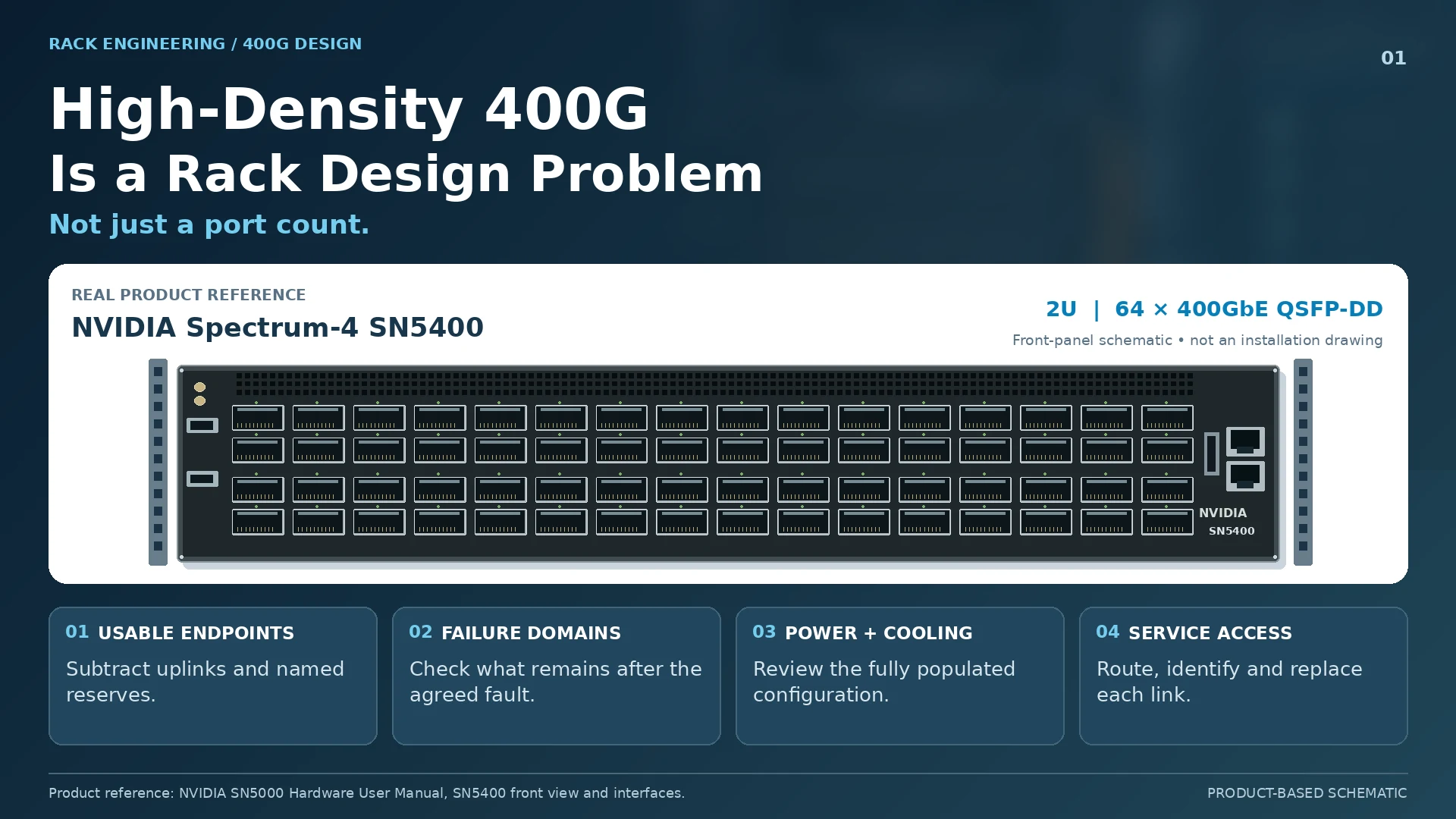
Evaluate usable 400G density with uplink allocation, failure domains, optical power, cable handling and maintenance access—not ports per rack unit alone.
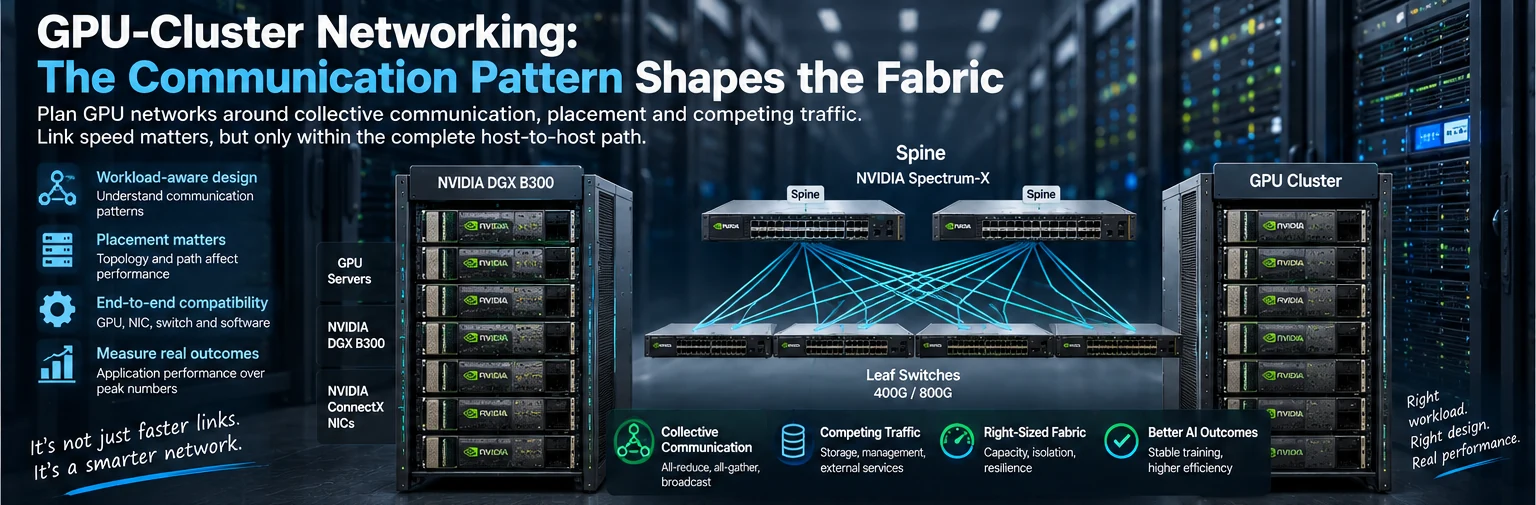
Plan GPU networks around collective communication, placement and competing traffic. Link speed matters, but only within the complete host-to-host path.