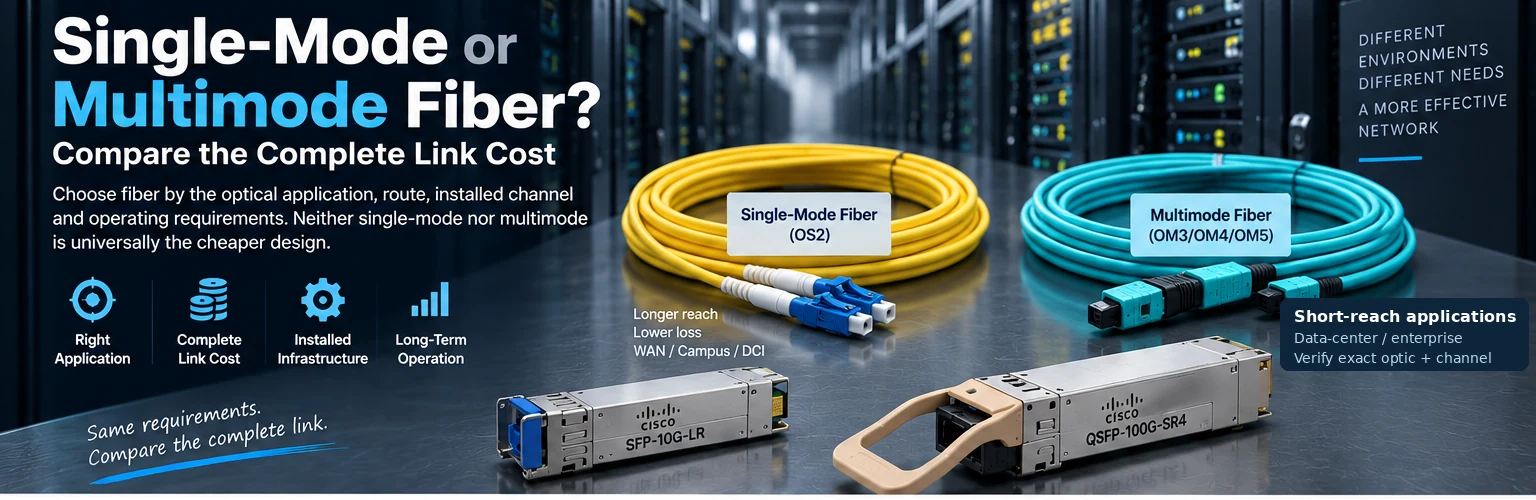
“Single-mode or multimode?” is often asked as though the answer depends only on distance. Distance matters, but the optical application, installed infrastructure, connector arrangement and maintenance model can be equally important.
The right comparison is between complete supported links—not fiber cable prices in isolation.
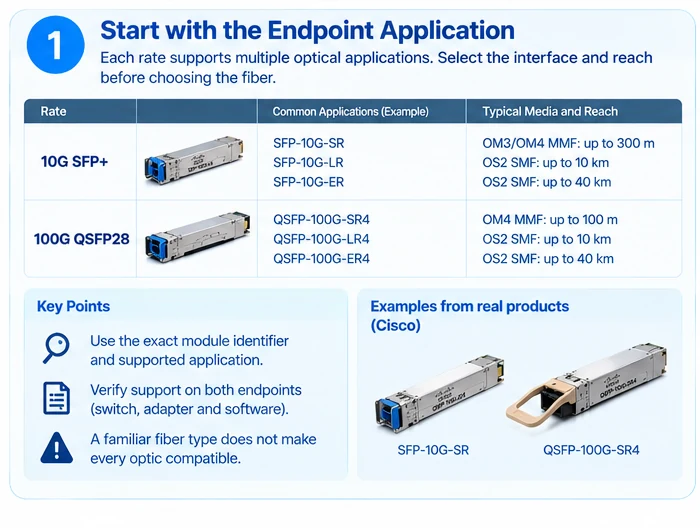
Start with the endpoint application
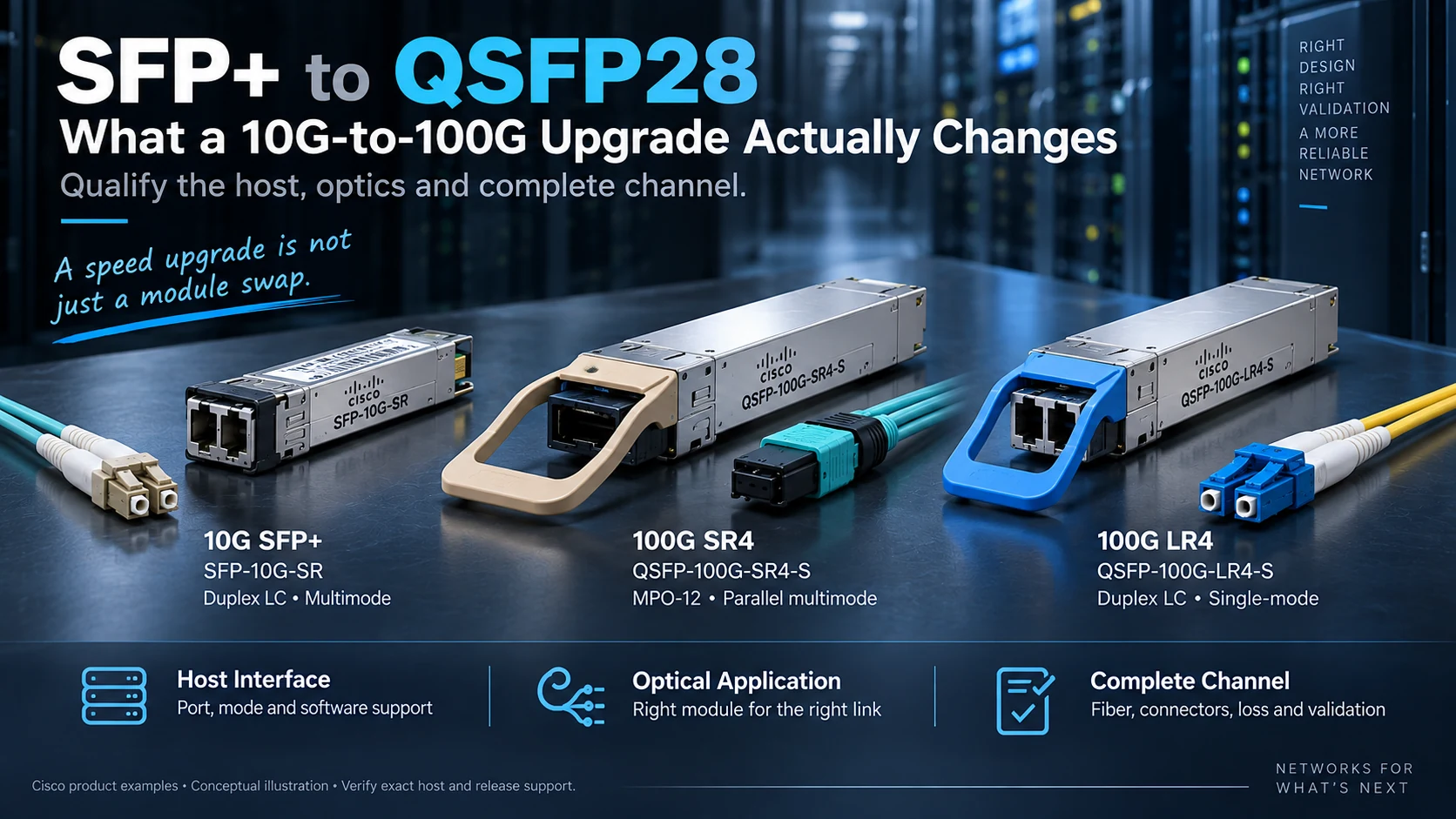
Identify the interfaces available at both devices and the optical applications they support. Cisco’s 10G and 100G transceiver documentation illustrates that each rate can have multiple media and reach options with distinct conditions. R18R25
Select candidate applications before deciding which fiber channel to build or reuse. A familiar fiber category does not make every optic compatible with it, and a nominal reach is not a substitute for the application’s channel requirements.
Avoid universal rules such as choosing one medium below a single distance threshold and the other above it. Those shortcuts omit interface-specific constraints.
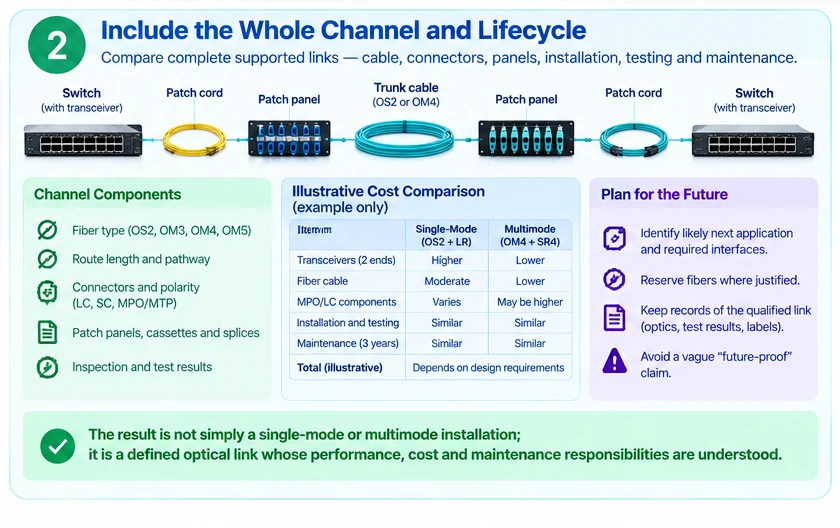
Include the whole channel in the comparison
Record the route, patch panels, cassettes, connector types, polarity and relevant loss limits. For multi-fiber links, the connector and polarity plan require their own review. R42
An existing channel can affect the decision significantly. Reusing a qualified route may avoid installation work; adapting an unsuitable patching arrangement may add enough complexity to change the comparison.
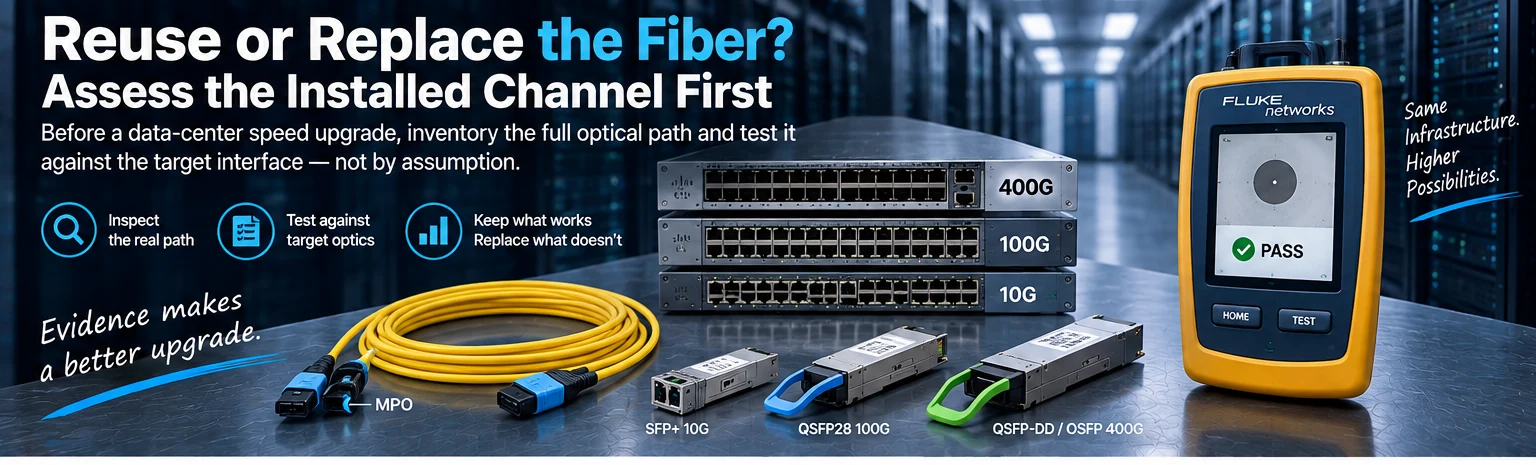
Inspect and test what is installed. Connector condition is a separate issue from the cable’s nominal type or category. R17
Price both endpoints and future maintenance
Include both transceivers, all passive components, installation, testing and spare strategy. Compare alternatives that meet the same application and service-life requirement.
An illustrative cost comparison might find a lower cable price offset by more expensive optics or additional channel work. Another may favor a new route because the existing one has uncertain documentation and repeated handling problems. These are project-specific outcomes, not general statements that one medium always costs less.
| Comparison dimension | What to include |
|---|---|
| Optical application | Supported interfaces and documented reach/loss conditions |
| Installed infrastructure | Reuse potential and evidence of channel suitability |
| Initial cost | Both optics, passive components, installation and testing |
| Maintenance | Inspection, replacement access, labeling and spares |
| Planned changes | Specific future applications, not an unlimited upgrade promise |
Make future needs explicit
A channel can be designed with growth in mind, but “future-proof” is not a measurable requirement. Identify the likely next application, the interfaces it would require and the assumptions under which the channel could be reused.
Reserve space or fibers where the plan justifies it, and document why. Unused capacity has value only when it supports a plausible change without creating unnecessary cost or complexity today.
Record the selected application with the fiber
The handover should identify the complete channel and the endpoint optics it was qualified to support. Retain inspection and test records, labels and routing information.
This keeps the choice explainable. The result is not simply a single-mode or multimode installation; it is a defined optical link whose performance requirements, cost and maintenance responsibilities are understood.
Engineering illustrations
These figures illustrate the design concepts discussed here. They are not measured results, certified configurations or a supplied-equipment list.